Selling Your MetroWest Home: 2026 Strategies
What does it take to sell a home successfully in MetroWest in 2026?
Selling a MetroWest home in 2026 means navigating a market that is still competitive and expensive by national standards, but meaningfully more balanced than the frenzy of 2021–2022. Homes priced accurately and presented well still attract strong offers, recent data shows Greater Boston single-family homes selling at roughly 100.4% of list price, but buyers now have more choices and more time to decide. The sellers who win are the ones who prepare strategically, price honestly, and market professionally from day one.
Understanding the 2026 MetroWest Market Before You List
The first thing I tell every seller who asks me about timing: know what market you're actually walking into, not the one from three years ago.
Across Greater Boston, Warren Group data compiled by Patch shows the median single-family sale price in April 2026 reached $815,000, up 2% year-over-year. Single-family prices have held their value. Condos are a different story, the median condo price in Greater Boston dipped slightly to $620,000 in April 2026, down from $629,000 a year earlier, and was down about 5% for the January–April period.
For a closer look at how the towns I work in most are performing, here's what recent Zillow market data (trailing approximately 90 days as of August 2026) shows at the area level:
| Area | Median Sale Price | Median Days on Market |
|---|---|---|
| Natick | $900,000 | 50 |
| Framingham | $676,500 | 51 |
| Newton | $1,575,000 | 36 |
These are area-level medians. Your home's value depends on its condition, street, build year, and current competition. But the directional story is clear: MetroWest remains a high-value market, and well-positioned homes are still selling.
What's shifted is the pace. A Realtor.com report on the Boston market from June 2026 shows active listings up 13.6% year-over-year and median days on market rising to 37 days, up nearly 20% from a year prior. Homes.com's Boston housing market report for June 2026 notes inventory at the highest June level since 2020, with just over 13,500 homes listed for sale across the Boston area.
More inventory means buyers are comparing your home against more options than they were in 2022. That changes how you have to show up.
For a deeper dive into what the numbers mean for sellers right now, my post on MetroWest real estate market trends in 2026 walks through the regional picture in detail.
How to Prepare and Price Your Home to Win in This Market
Start with an honest pricing strategy
Pricing is the single biggest lever you have. Get it right and you create competition. Get it wrong and you sit, and sitting costs you.
A Q1 2026 Massachusetts market report found that the median Greater Boston single-family home sold at 100.4% of list price, meaning accurate pricing still produces full-price (or slightly above) outcomes. Condos came in at 99.5% of list. These ratios tell you the market is tight but not forgiving of overpricing. Homes that start too high don't just sit, they accumulate days on market, invite lowball offers, and often net less than a well-priced home would have from day one.
I build every pricing recommendation from a detailed comparative market analysis, not an algorithm. Online estimates are a starting point, not a strategy. Your specific number depends on your home's condition, location, lot, and what's currently active or pending in your immediate neighborhood. That's the conversation we need to have before you pick a number.
Prepare the home like buyers have choices, because they do
With inventory up across Greater Boston, buyers are walking through multiple homes before making a move. Turnkey, well-presented properties still command premiums. Homes that need work face steeper negotiation or longer waits.
Here's how I coach my sellers on preparation before we go live:
- Declutter and depersonalize. Buyers need to picture their life in the space, not yours. This means clearing counters, editing furniture, and packing away personal collections.
- Address the deferred maintenance list. Leaky faucets, cracked caulk, sticky doors, and scuffed paint are small fixes that signal big neglect to buyers. Walk the home as a buyer would and fix what you'd notice.
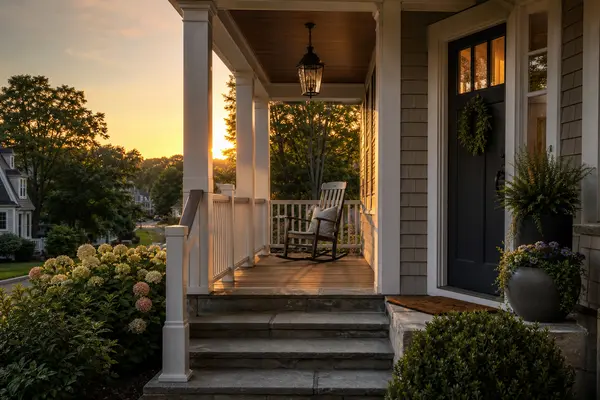
- Invest in curb appeal. First impressions happen before buyers step inside. Fresh mulch, trimmed shrubs, a clean front door, and functioning exterior lighting cost very little relative to the impression they make.
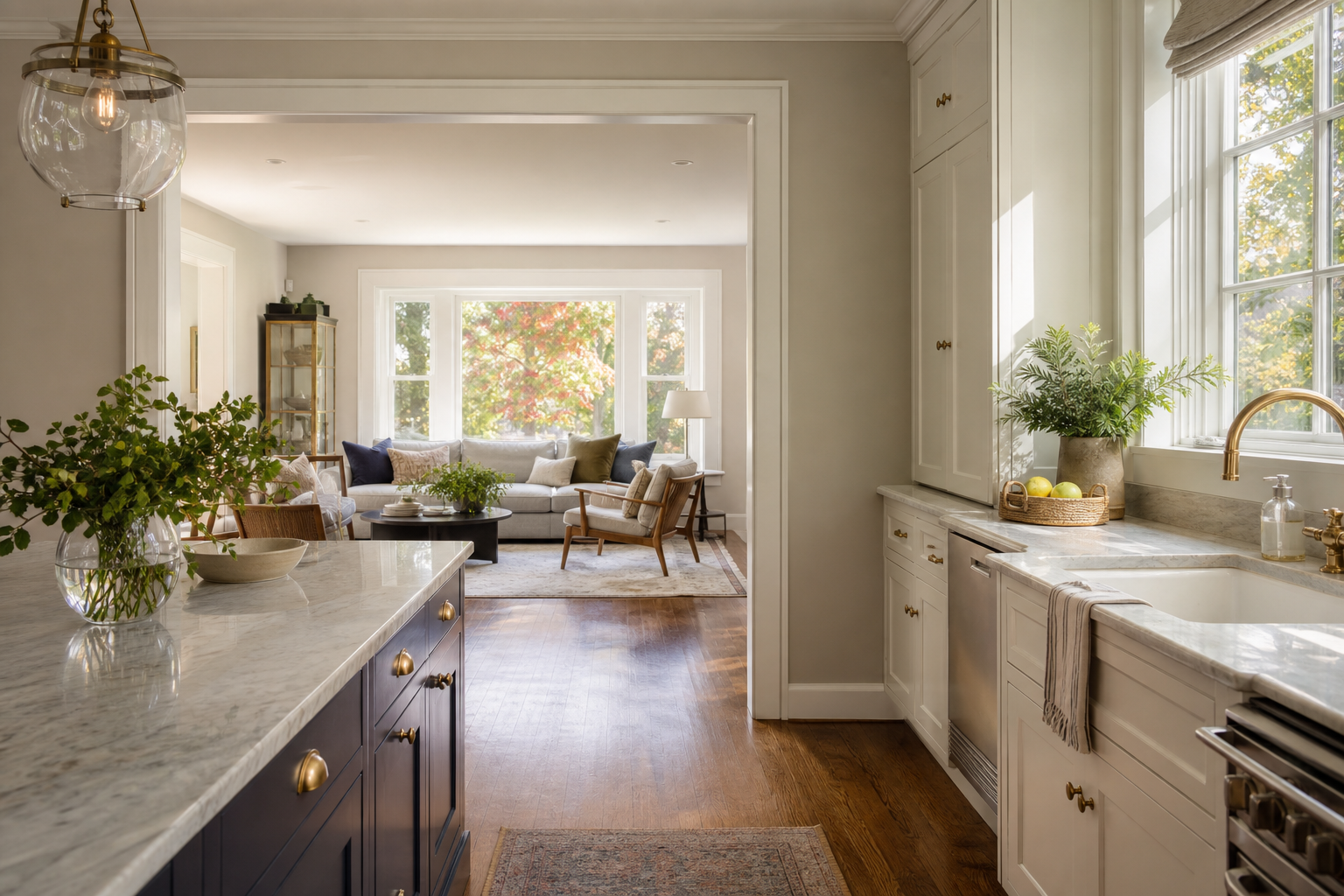
- Stage strategically. Full staging isn't always necessary, but key rooms, living room, primary bedroom, kitchen, benefit from intentional furniture placement and neutral styling. I can advise on what level of staging makes sense for your price point.
- Professional photography is non-negotiable. In a market where buyers start their search online, your listing photos are your first showing. Poorly lit, wide-angle-distorted images cost you traffic before anyone schedules a tour.
Understand the Massachusetts selling process
Massachusetts is an attorney-closing state. That means you'll engage a real estate attorney to review offers, draft or review the purchase and sale agreement, coordinate with the buyer's attorney and lender on title and closing documents, and represent your interests at the closing table. This isn't optional, it's standard practice here and is typically required by lenders as well. The Massachusetts Bar Association is a good starting point if you need a referral.
On the disclosure side, Massachusetts does not mandate a single statewide seller disclosure form the way some other states do. What the law does require is that sellers not misrepresent or conceal known material defects, and that lead paint hazards in homes built before 1978 be disclosed under both state and federal law. Many brokerages, including William Raveis, use their own seller disclosure forms as part of the listing process. Your attorney will walk you through exactly what's required and advisable for your specific property.
Massachusetts also levies a real estate transfer tax (called the deeds excise) under Massachusetts General Laws Chapter 64D, collected when the deed is recorded at the Registry of Deeds. In practice, this cost is commonly associated with the seller side of the transaction, but who pays is negotiable and should be addressed explicitly in your purchase and sale agreement. For the exact rate and calculation method, the Massachusetts Department of Revenue and your county Registry of Deeds are the authoritative sources. (For Framingham and Natick, that's Middlesex South Registry of Deeds; for Newton, it's also Middlesex South.)
On commissions: broker fees are fully negotiable and not set by law or any standard rate. There is no fixed or customary percentage. The listing fee is agreed in your listing agreement, and any compensation you choose to offer a buyer's agent is a separate, optional decision. I'm happy to walk through all of this in a consultation so you understand your options before you sign anything.
Know your timeline
Here's a realistic picture of what the selling process looks like in MetroWest right now:
- Pre-listing preparation: 2–6 weeks. This covers the agent and attorney consultation, repairs, staging, photography, and pricing analysis. Rushing this phase is one of the most common mistakes I see.
- Active marketing: roughly 3–6 weeks. Based on current data, median days on market running 34–51 days across Framingham, Natick, and Newton, plan for an offer window measured in weeks. Well-priced turnkey homes can still move faster, but the 2021 "offer in 48 hours" baseline is not the norm in 2026.
- Offer to closing: approximately 30–60 days. Once you're under contract, Massachusetts transactions typically close within about 30–60 days, depending on financing, title, and occupancy needs. Your attorney manages the bulk of this phase.
If your first listing attempt didn't go the way you planned, my post on what to do when your house didn't sell covers exactly how to reset and relaunch.
Frequently Asked Questions
How long does it take to sell a home in MetroWest right now?
Based on recent Zillow market data (trailing approximately 90 days as of August 2026), median days on market run about 50–51 days in Natick and Framingham, and 36 days in Newton. Across Greater Boston more broadly, Q1 2026 data shows single-family homes selling in a median of 33.6 days. Well-priced, well-presented homes can move faster; overpriced or under-prepared homes take longer. Plan for a marketing window measured in weeks, not days.
Are buyers still paying over asking in Greater Boston, or has that cooled off?
Mostly yes, but modestly. Q1 2026 data shows Greater Boston single-family homes selling at a median of 100.4% of list price, meaning most well-priced homes still sell at or just above asking. Condos came in at 99.5%. The days of routine 10–15% over-ask bidding wars are largely behind us, but accurate pricing still produces competitive outcomes.
What should I do to prep my MetroWest house before listing in this 2026 market?
With inventory across the Boston area at its highest June level since 2020 (per Homes.com's June 2026 report), buyers are comparing multiple options before committing. Focus on decluttering, addressing deferred maintenance, improving curb appeal, and investing in professional photography. Turnkey homes still command premiums; homes that need work face steeper negotiation in this more balanced market.
Is the MetroWest condo market softer than single-family homes in 2026?
Yes, regionally. Warren Group data for April 2026 shows the Greater Boston median condo price down slightly year-over-year to $620,000, while single-family prices rose about 2%. Condos are also taking slightly longer to sell, a median of 38.3 days in Q1 2026 versus 33.6 days for single-family homes. If you're selling a condo, pricing and presentation are especially important right now.
Do I need a real estate attorney to sell my home in MetroWest?
Yes, in practice. Massachusetts is an attorney-closing state, meaning it's standard, and typically required by lenders, for both buyers and sellers to have real estate attorneys involved in reviewing the purchase and sale agreement, managing title, and handling the closing. Your attorney works alongside your agent, not instead of one. I can recommend experienced local attorneys if you need a starting point.
The Bottom Line
Selling in MetroWest in 2026 is absolutely doable, but it rewards preparation and honest pricing more than it rewards wishful thinking. The sellers I see succeed are the ones who treat this as a strategy, not a transaction.
If you're thinking about listing, whether that's this fall, early 2027, or you're still just running the numbers, I'd love to walk through your specific situation. A conversation costs nothing, and it'll give you a much clearer picture of what your home is worth and what it takes to get there.
Schedule a free consultation with me here, and let's build a plan that works for your home, your timeline, and your goals.
Equal Housing Opportunity. Betsy Wilson is a licensed Real Estate Sales Person in the Commonwealth of Massachusetts. This article is provided for general informational purposes only and does not constitute legal, tax, or financial advice. Readers should confirm their own costs, obligations, and transaction details with their attorney, tax advisor, lender, or closing officer.
Recent Posts