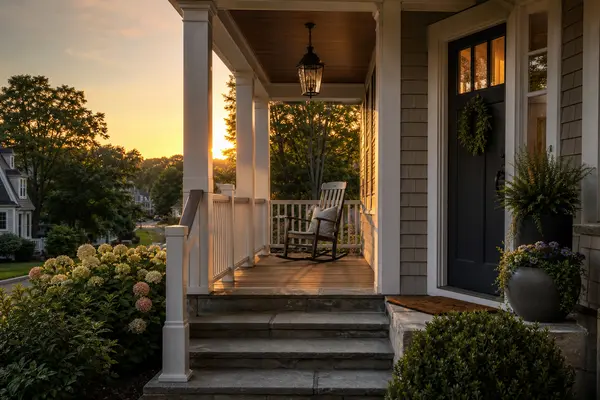
Downsizing in Newton: Finding the Right Smaller Home

Downsizing in Newton: Finding the Right Smaller Home
How do you downsize in Newton without sacrificing comfort and style?
Downsizing in Newton works best when you match your lifestyle priorities to the right product type: classic condo conversions near village centers for walkability and character, or newer elevator buildings and townhomes for accessibility and modern amenities. Newton's condo market in 2026 spans from under $600,000 for a modest 2-bedroom unit to well over $1 million for a luxury townhouse, so there's genuine range here. The key is knowing what you're trading and what you're gaining before you list your larger home.
What the Newton Market Looks Like for Downsizers in 2026
Newton is one of Greater Boston's most sought-after communities, and that doesn't change just because you're moving to something smaller. According to recent Zillow market data, the area-level median sale price in Newton is $1,575,000, with homes selling in a median of 38 days. That's a fast-moving market, and it tells you something important: if you're selling a larger single-family here, you're likely sitting on significant equity.
That equity is your biggest asset in a downsizing move. The question I help my clients work through is how to deploy it strategically, whether that means buying a condo outright, carrying a smaller mortgage, or freeing up cash for retirement or other goals.
For context, here's how Newton compares to nearby MetroWest communities based on recent Zillow market data (trailing roughly 90 days, as of August 2026):
| Area | Median Sale Price | Median Days on Market |
|---|---|---|
| Framingham | $673,000 | 52 |
| Newton | $1,575,000 | 38 |
These are area-level medians. An individual home's value depends on condition, street, build year, and timing. But the comparison makes one thing clear: downsizing within Newton means staying in a premium market. If budget is a primary driver, communities like Framingham or Natick (where the recent median is around $890,000) can offer more square footage per dollar, or lower entry points into condo living. I walk my clients through this tradeoff honestly, because the right answer depends entirely on your priorities.
If you want a broader look at the benefits and challenges of downsizing across the region, I've written a full overview in my post on downsizing in MetroWest that covers the bigger picture.
The Two-Tier Condo Market in Newton
Newton's condo market in 2026 isn't uniform. Research from mid-2026 points to a two-tier dynamic: a more attainable segment in the $600,000 to $740,000 range (think 2-bedroom units around 1,150 square feet in smaller buildings or older conversions), and a higher-end segment where Q2 2026 medians ran above $1.1 million for larger, newer, or luxury townhouse-style units.
What that means practically: if you're coming out of a 4-bedroom colonial, you have options at both tiers. The lower tier gets you out of maintenance obligations and into a manageable space. The upper tier can feel more like a lateral move in terms of finish level and square footage, just without the yard, the furnace, or the roof.
Neighborhoods Within Newton Worth Knowing
Newton isn't one neighborhood. It's a collection of villages, and where you land matters for your day-to-day lifestyle. Areas near village centers like Newton Centre, Newtonville, and West Newton tend to have more condo inventory, walkable retail, and MBTA access. Areas like Chestnut Hill and Waban are more single-family dominant, so downsizing there often means moving to a smaller house rather than a condo building.
As a Newton native, I know these distinctions well. The right village depends on whether you want to walk to dinner, need easy highway access, or prioritize a quieter residential feel. That's the kind of local knowledge that doesn't show up in a listing description.
What to Look For (and Watch Out For) in a Newton Condo
Most of the people I work with who are downsizing in Newton are entering a condo or homeowners association for the first time. That's a meaningful shift from owning a single-family home, and it comes with its own set of considerations.
Condo Documents Matter More Than You Think
Before you fall in love with a unit, you need to review the condo association documents. That means the master deed, bylaws, budget, and reserve study. Here's what I tell every buyer I work with on a condo purchase:
- Monthly fees: Understand exactly what's covered. Some Newton condo associations include heat and hot water; others cover only exterior maintenance and common areas. The fee alone doesn't tell you the full story.
- Reserves: A well-funded reserve means the association can handle major repairs (roof, elevator, parking lot) without hitting owners with a special assessment. An underfunded reserve is a red flag.
- Recent special assessments: Ask what has been levied in the past three to five years and whether anything is pending. A surprise assessment after closing is one of the most common frustrations I hear from buyers who didn't dig into this.
- Rules on pets, rentals, and renovations: If you have a dog, want to rent the unit later, or plan to remodel the kitchen, the bylaws govern all of it. Don't assume.
Accessibility and Aging in Place
This is a practical consideration that comes up in almost every downsizing conversation I have. Older condo conversions, especially in 2-3 unit buildings, often have charm and location going for them but may involve stairs, narrow doorways, and no elevator. Newer buildings and purpose-built townhome developments are more likely to offer elevator access, step-free entries, and other features that matter as mobility needs change over time.
Neither choice is wrong. But it's worth thinking about what you'll need five or ten years from now, not just today. I often suggest clients consider a smaller home that works harder for your lifestyle rather than one that just happens to be smaller.
The 2026 Market Gives Condo Buyers Some Room
According to reporting from The Boston Globe in March 2026, the median single-family price in the Greater Boston region was $852,500 in February 2026, down 4% from the same month in 2025, alongside lower sales volume and some softening in demand. That context matters for downsizers: selling a larger single-family home in Newton may still be a strong position, while buying into the condo segment may offer slightly more negotiating leverage than in prior years.
That dynamic doesn't last forever, and it isn't uniform across every property. But it's a reason to pay attention to timing and to work with someone who can read the specific conditions on both sides of your transaction.
The Process: What a Newton Downsizing Transaction Actually Involves
Selling one home and buying another at the same time is one of the more logistically complex moves in real estate. Here's how I typically walk clients through it in Massachusetts.
You'll Want a Real Estate Attorney
Massachusetts is an attorney-closing state in practice, and in Newton, both buyers and sellers typically engage a real estate attorney. Your attorney will review or draft the Offer to Purchase and the Purchase and Sale Agreement, handle the title search, coordinate mortgage documents, and manage the closing and deed recording with the Middlesex South Registry of Deeds. This isn't optional in the sense that you could skip it and be fine. It's a standard part of the process here, and the cost is worth it for the protection it provides.
The Massachusetts Deeds Excise Tax
When you sell your Newton home, Massachusetts imposes a deeds excise tax on the transfer. The rate is set by state statute and applied to the consideration stated in the deed. According to the Massachusetts Department of Revenue, this tax is collected at closing when the deed is recorded. In Greater Boston and MetroWest, it is often allocated to the seller, but that allocation is negotiable in the purchase contract. Confirm how it's handled in your specific agreement with your attorney.
Disclosures and Lead Paint
Massachusetts law imposes specific mandatory disclosures. The most significant for older homes is the lead paint requirement: properties built before 1978 require a Property Transfer Lead Paint Notification form, per the Commonwealth of Massachusetts lead law requirements. Many Newton homes fall into this category. A Seller's Property Disclosure is also common practice in Greater Boston transactions, though the specific form and requirements are driven by your brokerage and statutory obligations. Your agent and attorney will walk you through what applies to your property.
Disclosures protect you as a seller and set expectations for buyers. They don't replace buyer due diligence, which on a condo purchase should always include a full inspection and a thorough review of the condo association documents.
Sequencing the Sale and Purchase
The most common anxiety I hear from downsizers is about timing: do I sell first, or buy first? There's no single right answer, but in a market where Newton single-families are moving in a median of 38 days, you have some predictability on the sell side. On the buy side, allowing 2-3 months from listing to close is a reasonable planning assumption, though individual properties can move faster or slower.
Options worth discussing include contingent offers, rent-backs (staying in your home for a period after closing), and bridge financing. Every situation is different, and the only way to map out the right sequence is to run through your specific numbers and timeline with someone who knows this market. That's exactly the kind of planning conversation I have with clients before we do anything else.
Frequently Asked Questions
How much smaller can I realistically go in Newton without giving up comfort and style?
That depends on how you live now versus how you want to live. Many of my clients find that 1,200 to 1,600 square feet in a well-designed condo or townhome feels more comfortable than a 3,000-square-foot house they're only using half of. The key is prioritizing storage, natural light, and layout over raw square footage. Newton has condo options across a wide range, so there's usually a product that fits both your lifestyle and your budget.
Is 2026 a good time to sell my Newton single-family and buy a condo nearby?
The 2026 market in Newton has some favorable dynamics for this move. Single-family homes are still selling at strong prices and relatively quickly, while the condo segment has shown some softening compared to prior years, which can give buyers more room to negotiate. According to The Boston Globe's March 2026 market report, Greater Boston saw some price moderation in early 2026. That said, timing a simultaneous sale and purchase takes careful sequencing. I'd recommend a strategy conversation before you list.
What should I look for in a Newton condo or townhome if I'm downsizing from a house?
Focus on four things: the monthly HOA fee and what it covers, the reserve fund health, the rules on pets and renovations, and the physical accessibility of the unit (stairs, elevator, parking). Newer buildings tend to score better on accessibility; older conversions often win on character and location. Review the full condo documents, not just the listing sheet, before making an offer.
Do I need a real estate attorney to buy or sell a home in Newton, MA?
In practice, yes. Massachusetts real estate transactions are attorney-driven, and in Newton, both buyers and sellers typically hire their own attorney to review contracts, handle the title search, and manage the closing. Your attorney coordinates with the Middlesex South Registry of Deeds to record the deed and ensure the transaction is properly documented. This is standard practice here, not an optional add-on.
Who pays the property transfer tax when I sell my home in Massachusetts?
Massachusetts imposes a deeds excise tax on property transfers at a rate set by state statute, collected at closing. Per the Massachusetts Department of Revenue, the tax is tied to the consideration stated in the deed. In Greater Boston and MetroWest, it is commonly allocated to the seller, but this is negotiable in the purchase contract. Confirm the allocation in your specific agreement with your attorney before closing.
Downsizing in Newton is one of the more rewarding moves I help clients make, but it works best when you go in with a clear plan, realistic expectations about what the market offers, and the right team around you. If you're thinking about making this move, let's start with a conversation about what you have, what you want, and how to bridge the two.
Ready to explore your options? Schedule a consultation and let's map out your downsizing strategy together.
Equal Housing Opportunity. Betsy Wilson, Real Estate Sales Person, licensed in the Commonwealth of Massachusetts. This article is general information only and does not constitute legal, tax, or financial advice. Please confirm your specific costs, tax obligations, and transaction details with your attorney, tax advisor, lender, or closing officer.
Recent Posts